
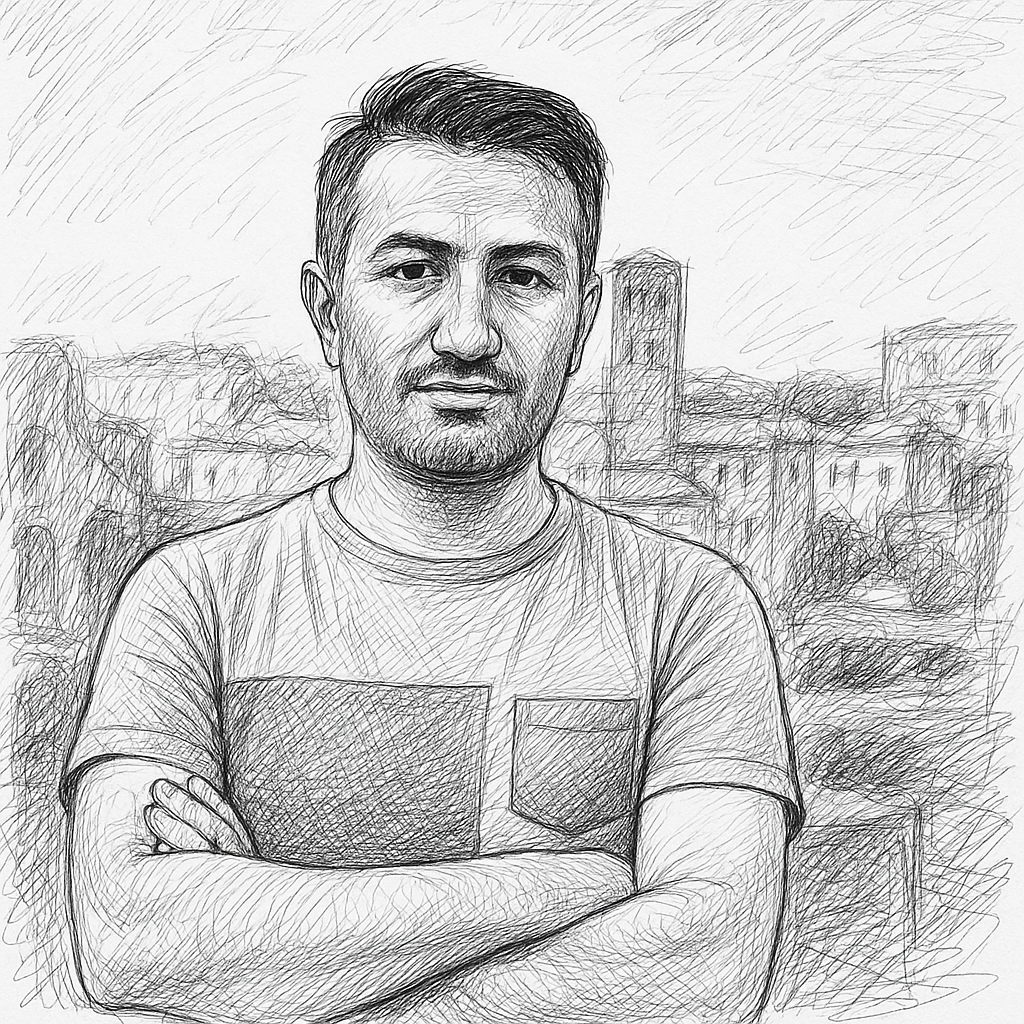
I’m Majid Khalili-Ardali, and my path into science has been anything but typical. I started out as a computer engineering student at Azad University of Tehran, working on robotics and image processing projects. After graduation, I didn’t plan to stay in academia. Instead, I spent several years working as a programmer. Those years shaped my skills in computation and problem solving, which have stayed with me throughout my research career. I soon realized how often this background gave me an edge—many peers struggled with programming, data analysis, and algorithmic thinking. It’s a gap I now try to help close by encouraging better ways of learning computer skills, especially programming. With tools like LLMs (large language models), it’s easier than ever to code, but there’s a risk of just “getting things done” without understanding the details. I want to help students learn how to use LLMs for scientific programming without losing critical thinking and the essential skills of structured problem solving.
During my years out of university, I became deeply interested in philosophy, especially the hard problem of consciousness: qualia—the raw “feel” of experience. What does the taste of a lemon feel like? How does the color red appear in the mind? Or what is the strange sensation of déjà vu? I read widely in classical philosophy, always trying to understand this invisible world of subjective experience. It was only later that I realized these questions were also being studied scientifically under the banner of cognitive science. That realization changed everything for me and set me on a new course.
I joined the Institute of Cognitive Science Studies (ICSS) in Tehran for a Master’s degree, where I explored language attrition in patients with locked-in syndrome. There I had the privilege of meeting Prof. Niels Birbaumer, a pioneer in neurotechnology and consciousness research. I still remember what he told me: “All your theoretical and philosophical ideas are nice, but none of that matters when you’re faced with real patients who cannot speak, move, or interact. That’s where science must prove itself.” His words grounded me, and I was lucky to later do my PhD with him at the University of Tübingen in Germany. Working with him shaped my approach as both a scientist and a person.
From there, my research has spanned several fields and countries. I worked at the Wyss Center in Geneva, developing intracortical brain-computer interfaces to help completely paralyzed patients communicate. There’s nothing more motivating than seeing a patient who has no other way to speak or interact finally manage to communicate through a BCI. After my PhD, I moved to Neurospin in Paris, where I worked on comparing different theories of consciousness, specifically the Integrated Information Theory (IIT) and Global Workspace Theory (GWT). This project was a unique collaboration between the leaders of these theories and experimentalists working with non-human primates. Alongside this, I also conducted experiments on anesthesia as another model of altered states of consciousness. Later, I joined the Donders Institute in Nijmegen for another postdoc, focusing on neurotechnology for stroke rehabilitation, while continuing my research on anesthesia. Currently, I am at Newcastle University, where my third postdoc involves exploring the neural mechanisms behind motor execution in non-human primates using advanced intracranial recordings. This work helps me complete the picture I’ve been building throughout my career: understanding the full loop between perception and action.
My research today focuses mainly on Altered states of consciousness, including disorders of consciousness (coma, minimally conscious states) and anesthesia, Brain-computer interfaces and neurotechnology for neurorehabilitation, and Electrophysiological recordings (EEG, fNIRS, LFP, sEEG, Neuropixels, …) and neural signal processing, especially spike sorting and neural decoding.
Beyond my main research, I’m also exploring new areas, including cognitive architectures and multi-agent simulations for studying social dynamics. It’s an emerging passion, and I’m looking forward to launching new projects in this space. Every now and then, when time allows, I teach courses and workshops—mainly on experimental design and data analysis.
I’ve built this website as a way to share knowledge and connect with students, colleagues, and the wider public. I strongly believe in popularizing science without compromising its accuracy. Science should not lose its depth just because it’s made accessible. In particular, I aim to offer high-quality science communication for Persian (Farsi) speakers, providing a much-needed bridge between the global neuroscience community and interested audiences in Iran and beyond.
So, whether you’re a fellow researcher, a student, or simply curious about the science of the mind, I invite you to explore, read, and even get involved.